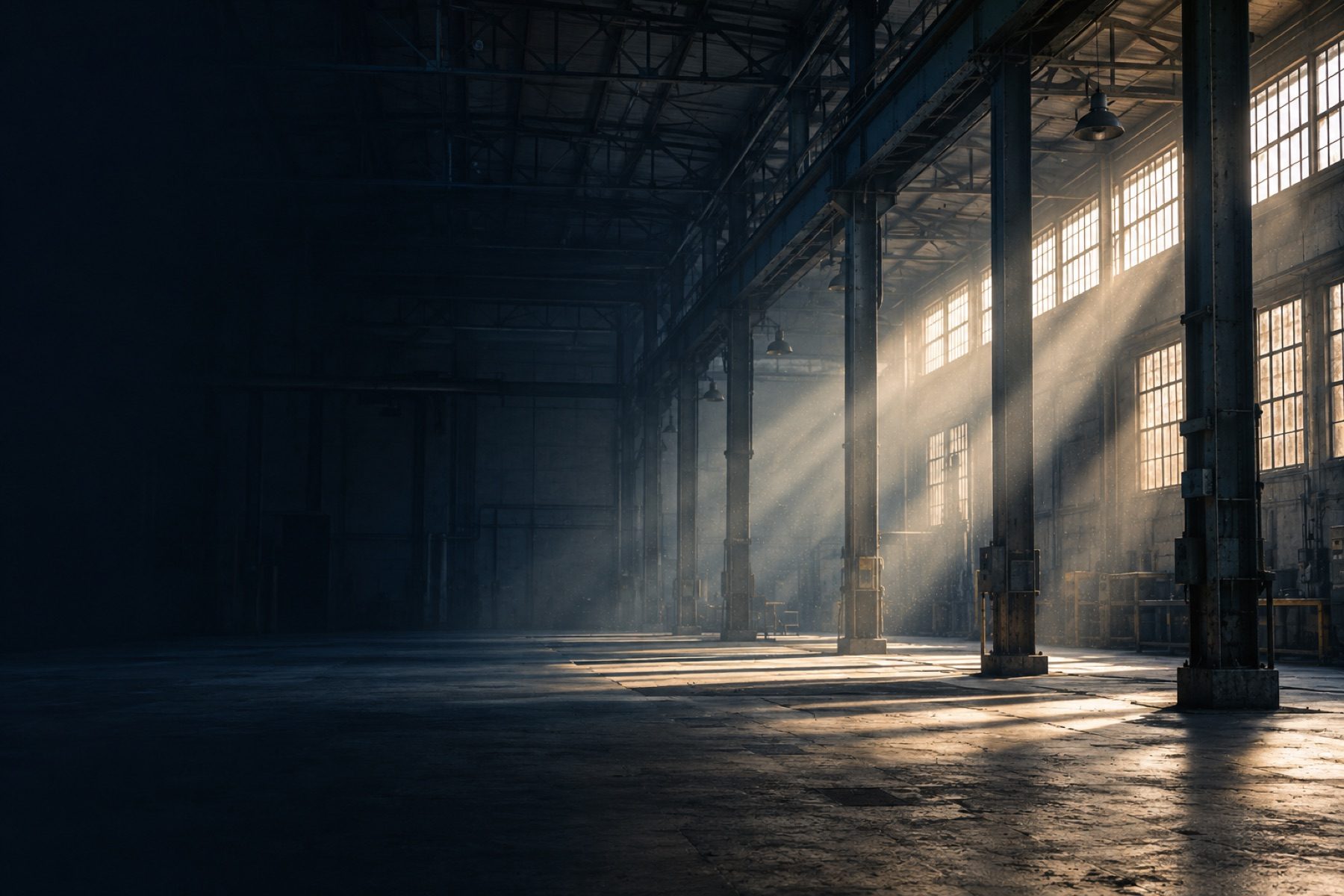
Ordinary air cleaners clean at the filter. Ours clean the whole room
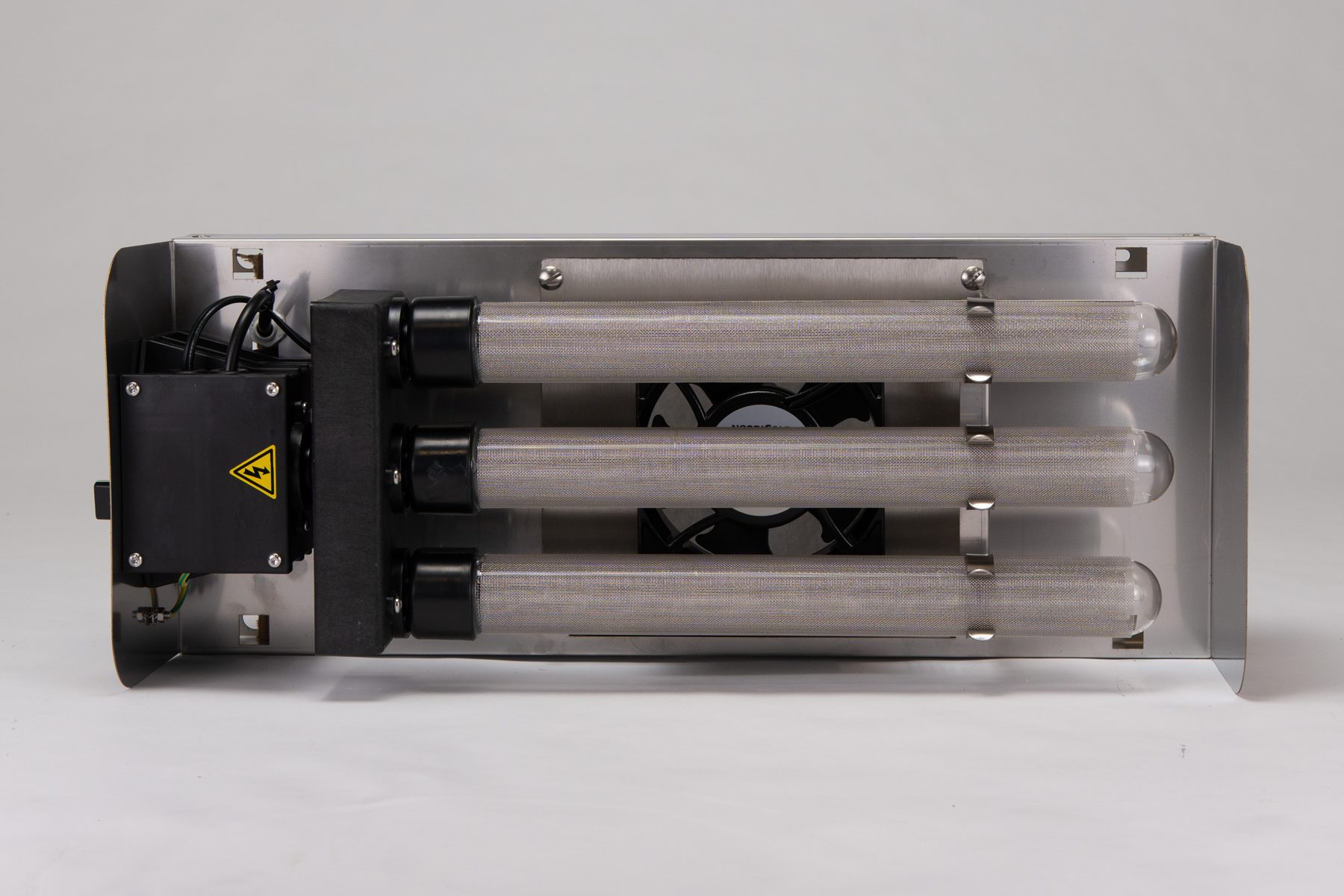
An ordinary air cleaner only cleans the air that happens to pass through the filter. The ionisation works actively out in the room, in the corners and up by the ceiling where particles collect.
The film explains in one and a half minutes how active air cleaning works. Swedish narration. After five minutes at the right ionisation level the relative particle level can fall by up to 95 %.
Odour is broken down, not masked
The odour in a waste room consists of compounds from food waste: hydrogen sulphide, amines and organic acids. The ions react with them in the air and break them down. That is different from fragrance dispensers, which put one smell on top of another, and it needs no carbon filter.
How we solve odour in the waste roomIs ionisation dangerous? Is ozone produced?
No. Our bipolar ionisation is ozone-free. It is a different technology from ozone generators, which are used to remediate empty premises and must not run while people are in the room.
The ions that form occur naturally in outdoor air, in higher concentrations by the sea and after rain. The products are CE marked, RoHS compliant and tested to the Low Voltage Directive. Our air cleaners have run since 1982 in premises where people work all day, from bakeries to workshops. Documentation is available on request.
The dust does not disappear, it lands on the floor
That is how it should be. Particles on the floor can be swept up. Particles in the air are what you breathe. Expect to see more dust on the floor during the first weeks, and less on shelves, machines and window sills.
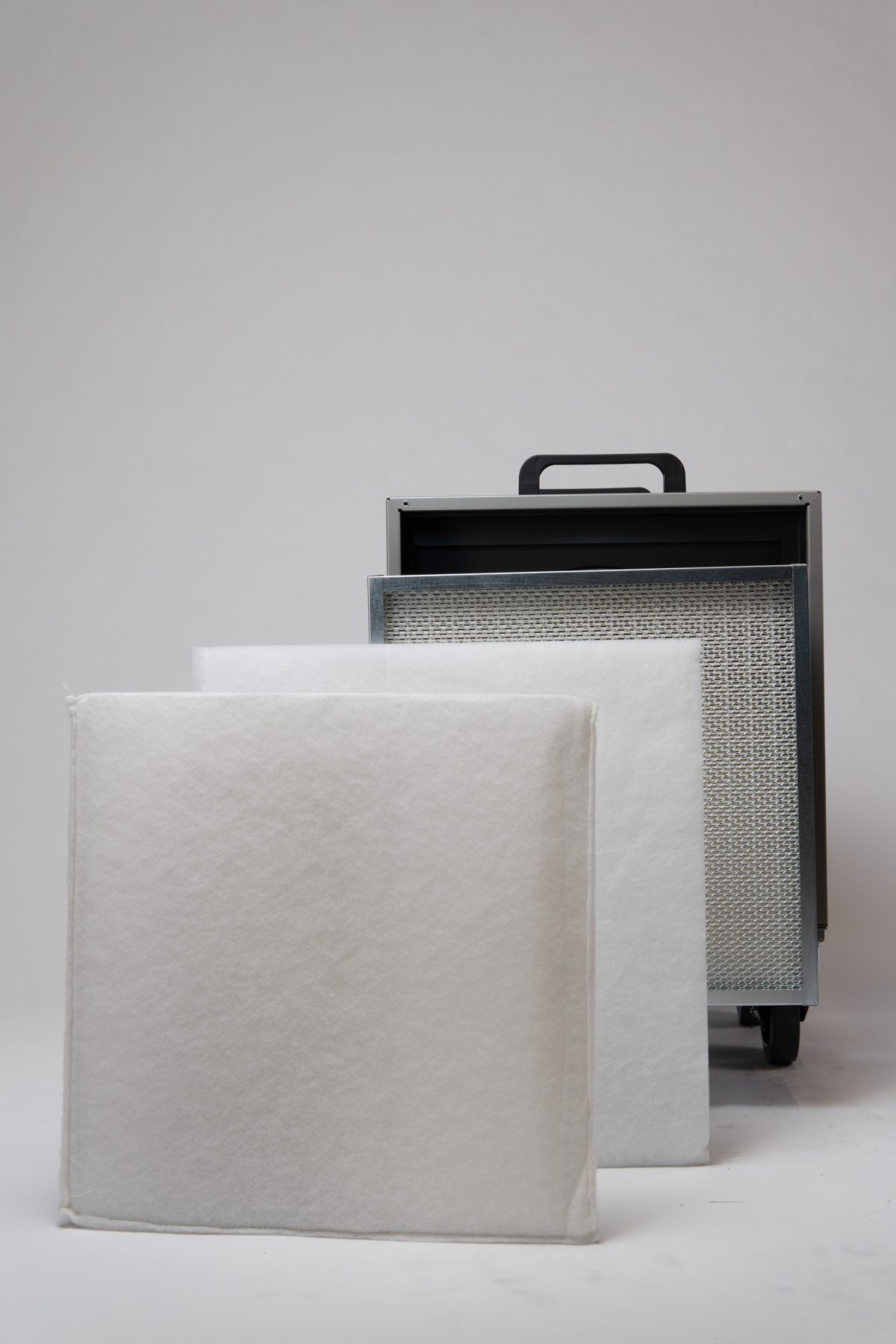
Filters are replaced at least once a year and ionisation tubes every two years.
When air cleaning does not fit
Our air cleaners take particles and odour compounds. They do not replace extraction at the source and they do not take gases.
- Welding fume should first be captured at the welding table with local extraction. The air cleaner takes what spreads anyway.
- Solvent vapours and other gases in high concentrations need process ventilation. Ionisation does not help there.
- An odour that comes from a leak, a blockage or damp in the building should be fixed at the source. Air cleaning does not hide a building defect.
If you are unsure, call. We will tell you honestly whether air cleaning solves the problem.